Features
Lens turns SAP from a system you query into a system you talk to — with the controls an enterprise IT team expects.
01 · Conversational access
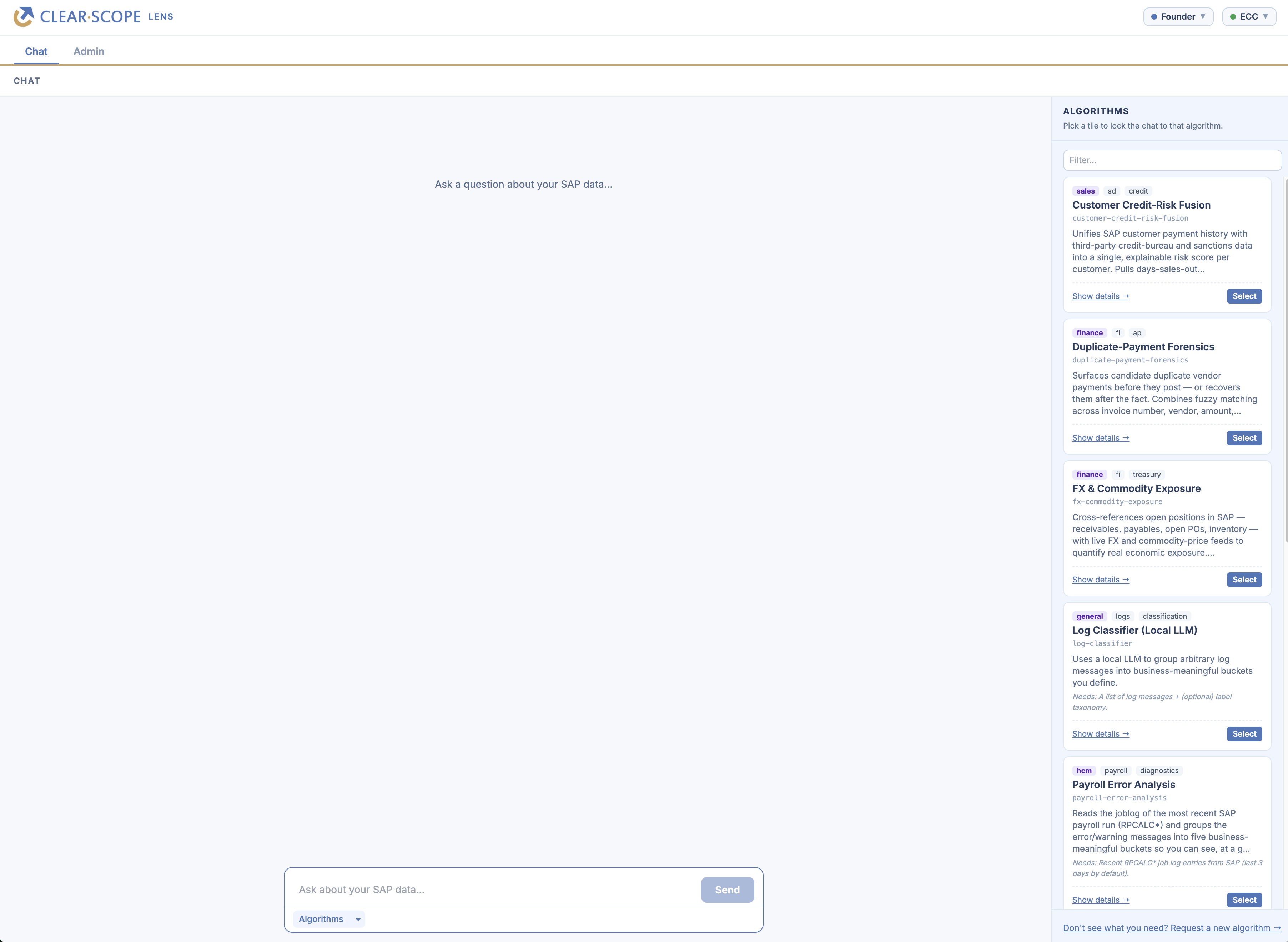
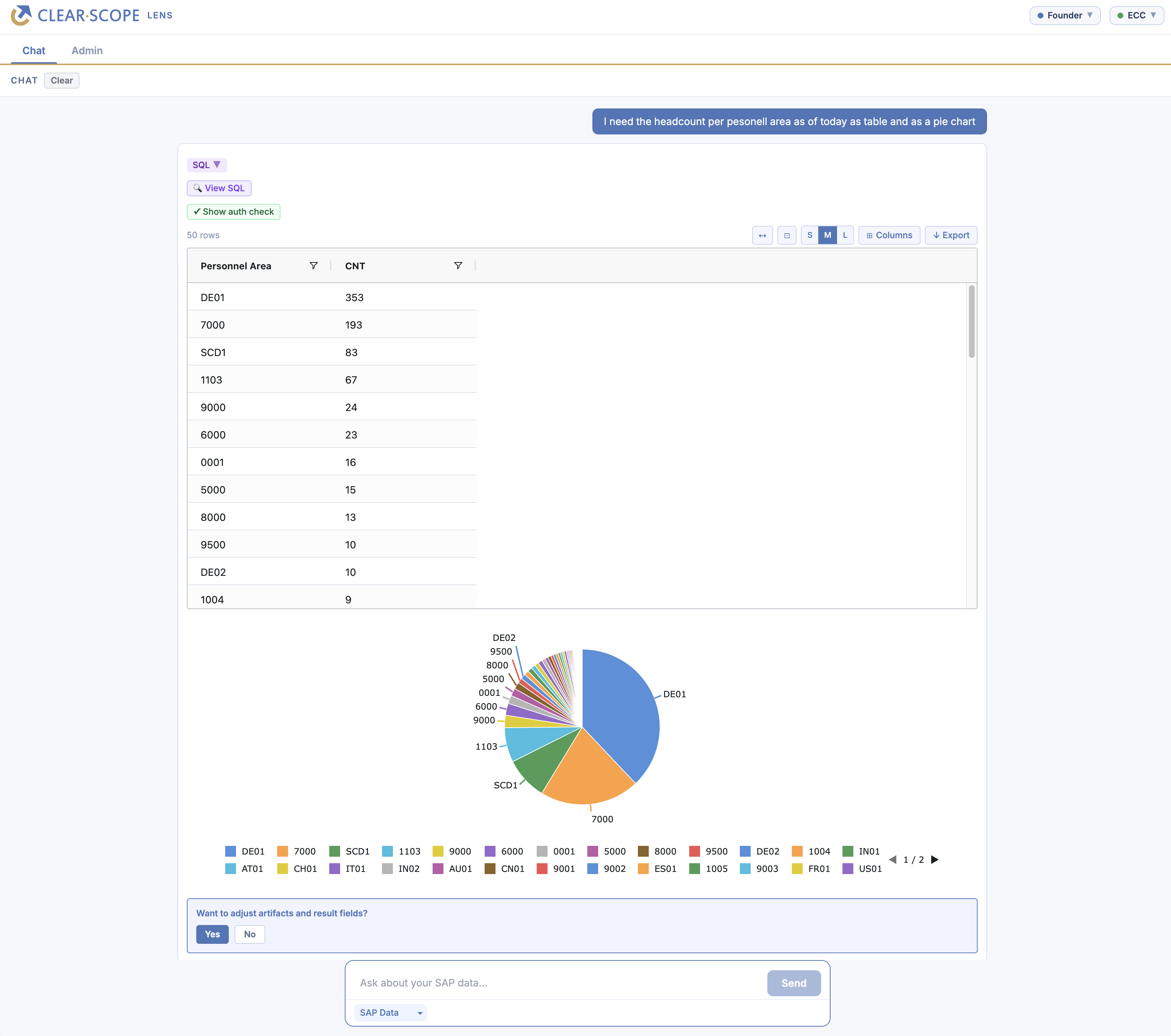
Business users describe what they need in their own words. Lens turns the question into a precise, read-only request against the right SAP objects — and shows the answer as a table, chart, or KPI.
"Show headcount per location for last quarter." No query syntax, no field codes, no training session.
Asks and answers in the user's language. The same question works in English or German out of the box.
When a question is ambiguous, Lens asks back instead of returning a confidently wrong answer.
Refine results across turns — filter, group, drill — without restarting the question from scratch.
02 · Schema-aware intelligence
Lens carries a curated business view of your SAP objects — what they mean, how they relate, which ones are sensitive — separately from the AI model itself. The model reasons over that knowledge instead of memorising your data.
Ask Lens to explain a part of your SAP landscape — what an object is for, where it connects, what to be careful with — and get an answer grounded in the curated catalogue, not internet folklore.
03 · Embedded ML algorithms
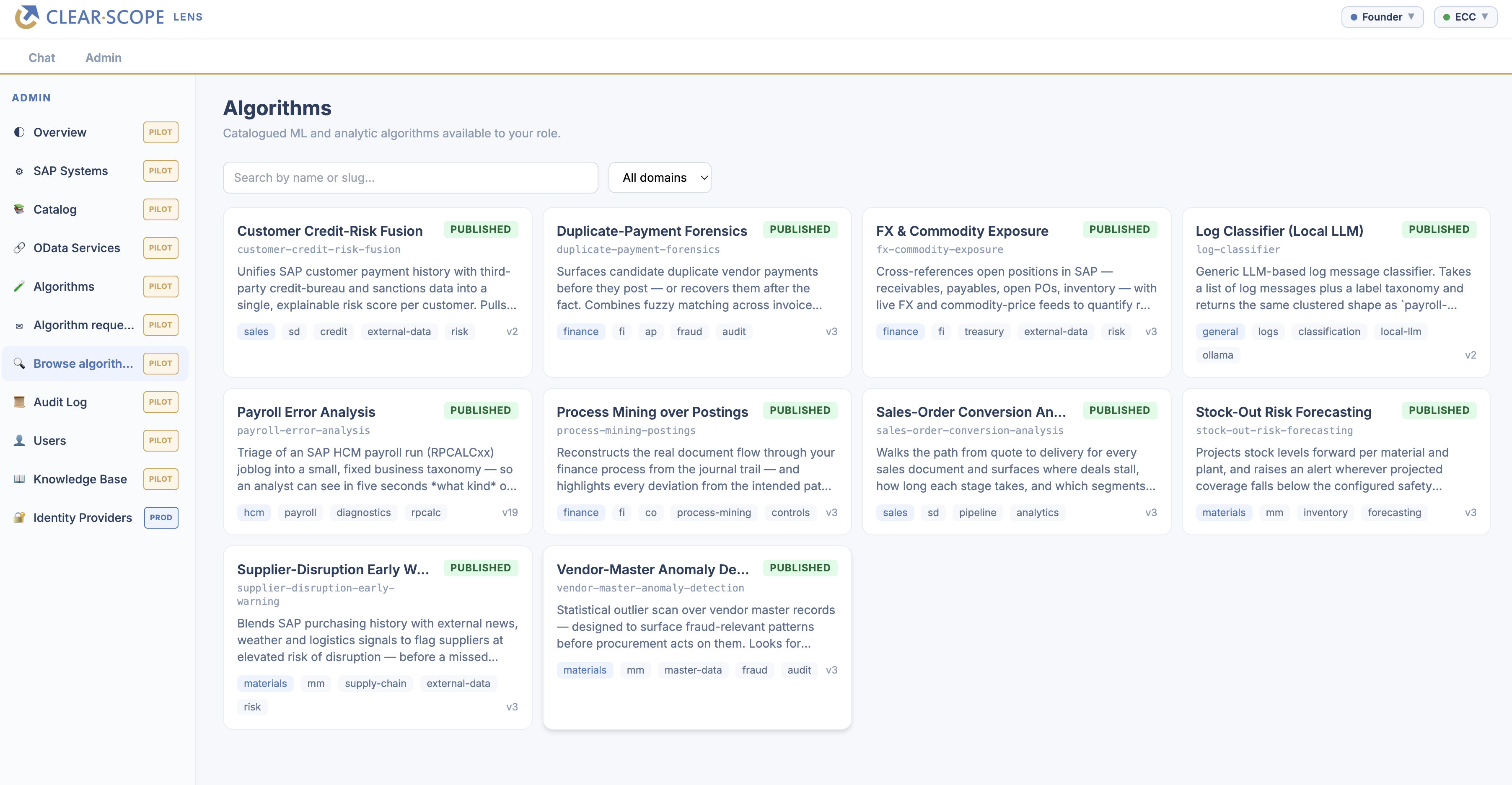
Some questions deserve more than a query — they deserve an analysis. Lens ships with a proven set of purpose-built algorithms you can use on day one, and the catalogue is fully extensible: every customer can add their own, replace ours, or ignore them entirely. Use what fits, leave what doesn’t.
The shipped algorithms are battle-tested in real deployments — documented purpose, expected inputs, paired result widget, frozen version per run.
Add your own. Replace ours. Hide what you don’t need. The catalogue is yours to shape — same governance model applies to built-in and custom alike.
If a chat question matches an available algorithm, Lens offers it as a hint — the user stays in control.
Every version carries a declared risk profile — sensitivity, decision-support scope, retention — visible to admins.
Inputs, parameters, version, and outcome are recorded so any past analysis can be audited later.
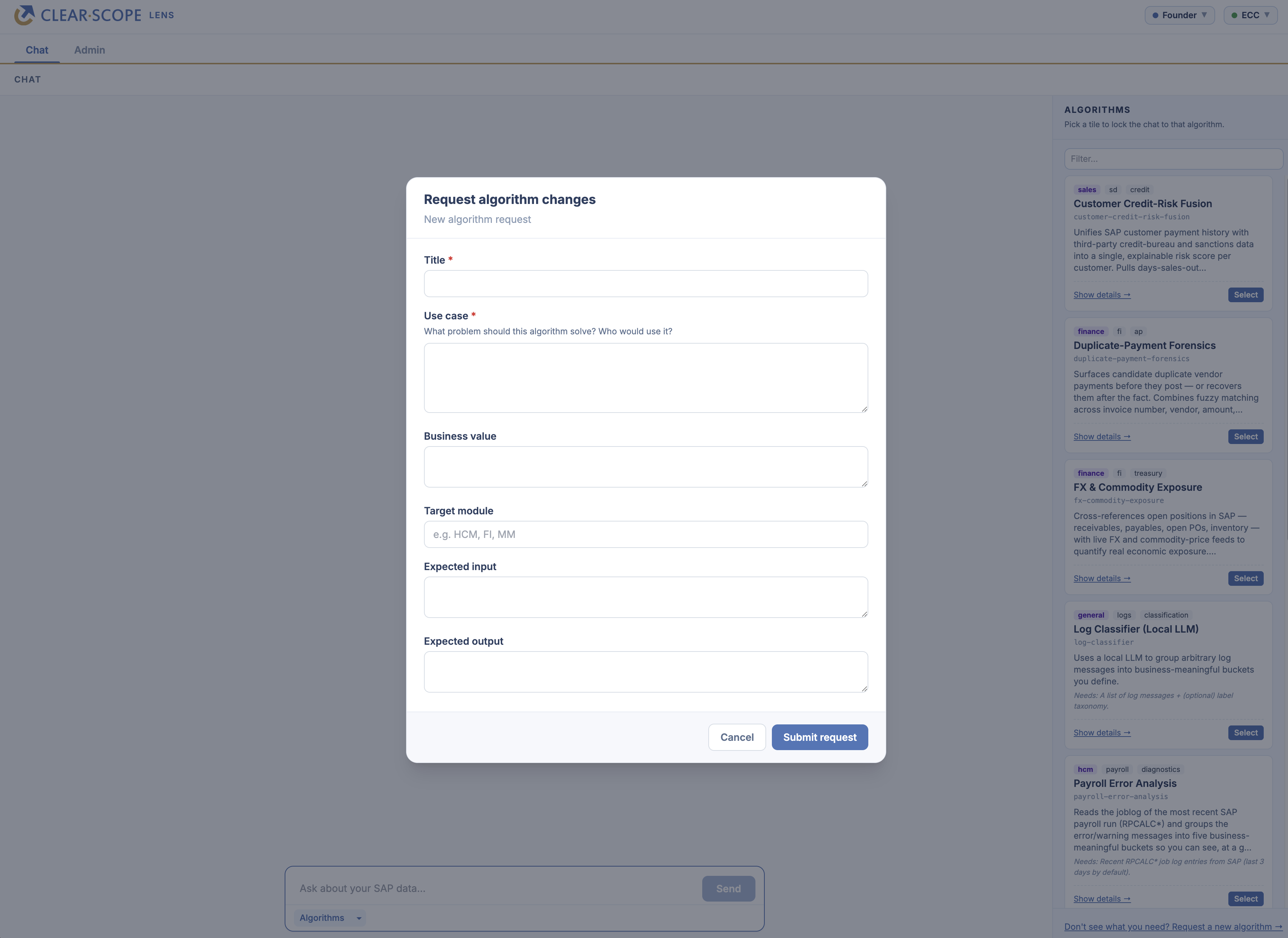
The catalogue is open-ended. If your team has a recurring analytical question that deserves more rigour than a chat answer, we package it as a new algorithm — versioned, governed, and reusable across the organisation. Most additions go from request to first run within a short, scoped engagement.
Examples of analyses customers and partners have asked us to scope. Some are operational, some are scientific — all benefit from being turned into a one-click, reproducible run.
Fuzzy matching across invoice attributes and bank details to surface candidate duplicates before they post.
Reconstruct real document flows from journal traces and highlight deviations from the intended process.
Time-series projection of stock levels per material and plant, with reorder-point alerts.
Statistical outlier scans over vendor master records to surface fraud-relevant patterns.
From quote to delivery: where deals stall, how long they take, and which segments convert best.
Combine SAP customer history with third-party credit-bureau and sanctions data for a unified risk score.
Cross open positions in SAP with live FX and commodity feeds to quantify exposure in real terms.
Blend SAP purchase history with external news, weather and logistics signals to flag at-risk vendors.
Illustrative ideas. Availability per customer depends on scoping and the underlying SAP data.
04 · Administration
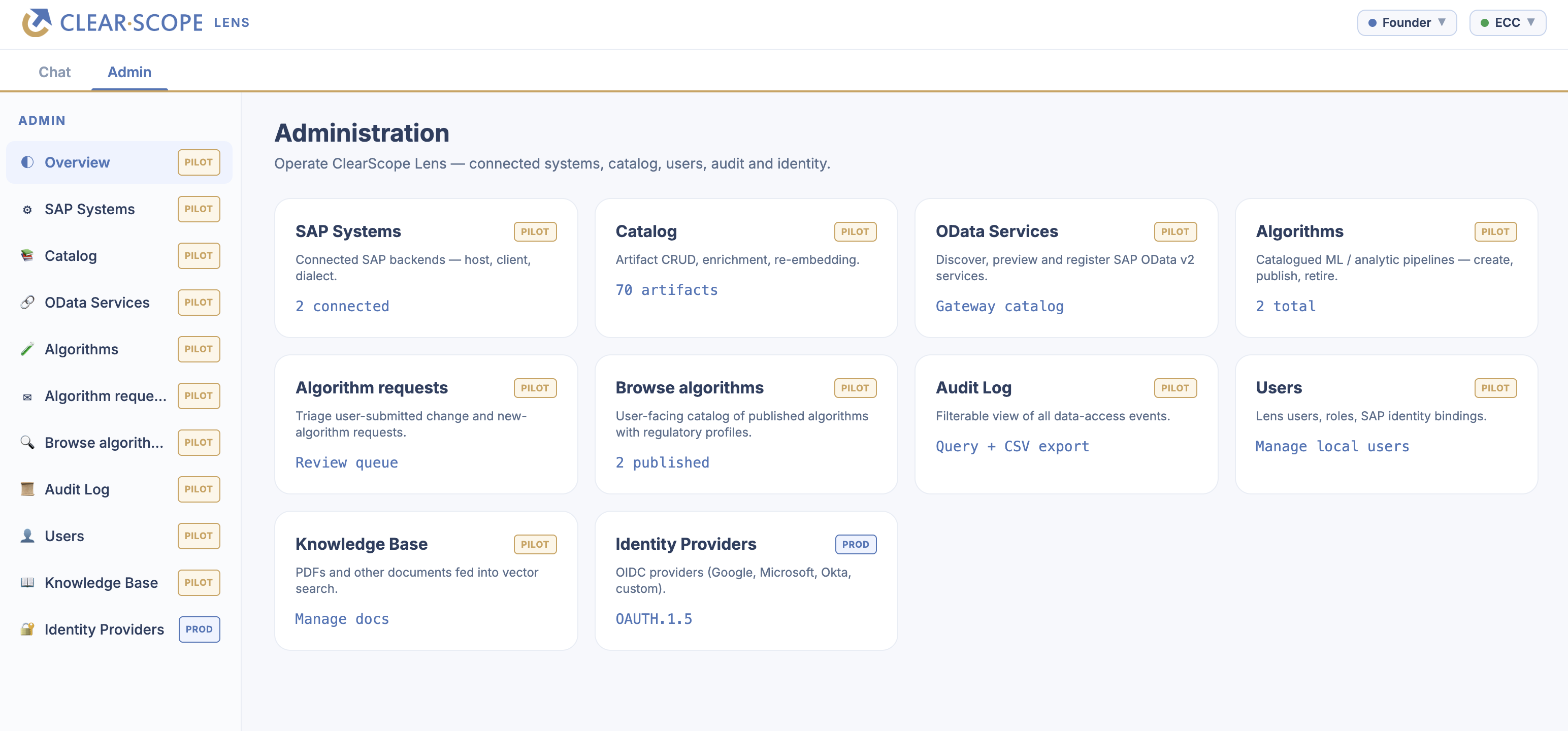
A dedicated admin surface to register SAP systems, manage users and roles, review pending change requests, and inspect the audit trail. Operations stay inside the same product — no separate tooling, no shell scripts.
A clean, single-pane chat experience with optional power features — algorithm runner, schema analysis, history — surfaced only when they add value. Nothing forces a non-technical user to think about plumbing.